- Born
- 11 August 1951
- Country
- United States
- Field
- physiologist
- In the library
- 2 works, named in 10 passages elsewhere
- Facts from
- Wikidata · Wikipedia · Open Library
The nest as a body
In his 2019 paper Levin describes the termite nest superorganism as marked by an extended physiology, citing Beekman and Oldroyd (2008) and Turner (2016). If the large nest is taken as the body, he says, it shows regenerative repair. It also shows a kind of swarm cancer and primitive cognition, such as hypothesis testing by the swarm during repair12. The passages are Levin's summary. They give no measurements from Turner's own experiments.
Scale of the self
Levin cites Turner (2011) with Seeley (2009) for the claim that cognitive concepts apply as much to societies of cells as to societies of animals. He adds that shared information binds small sub-agents into a larger self, and that this likely holds for swarms of bees and termites3. In 2022 he lists a Turner (2000) reference beside Clark and Chalmers for the extended mind, in a passage on larger selves managing sensing and action over larger spaces4. The held passages show Levin building on Turner's work. They do not show anyone disputing it.
the termite nest “superorganism is marked by a kind of extended physiology”, which supports regenerative repair
Levin M, 2019 · The Computational Boundary of a "Self": Developmental Bioelectricity Drives… · open at passage 28a kind of swarm cancer, and primitive cognition functions such as hypothesis testing carried out by the swarm during the repair process
Levin M, 2019 · The Computational Boundary of a "Self": Developmental Bioelectricity Drives… · open at passage 28These principles likely apply beyond cells in organs, to swarms of whole organisms such as bees and termites (Seeley, 2009; Turner, 2011)
Levin M, 2019 · The Computational Boundary of a "Self": Developmental Bioelectricity Drives… · open at passage 58from subcellular networks to the extended mind (Clark and Chalmers, 1998; Turner, 2000; Timsit and Gregoire, 2021)
Levin M, 2022 · Technological Approach to Mind Everywhere: An Experimentally-Grounded Framework… · open at passage 44
2002

2002 · described
2010
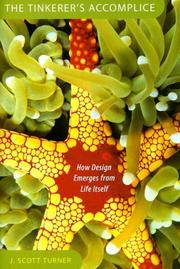
2010 · described