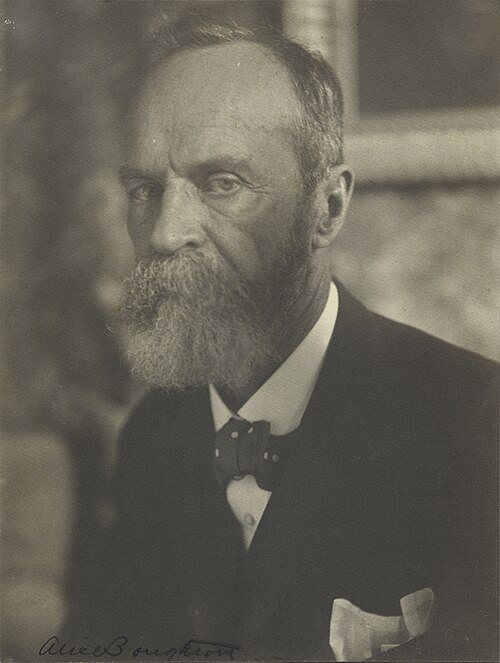
William James
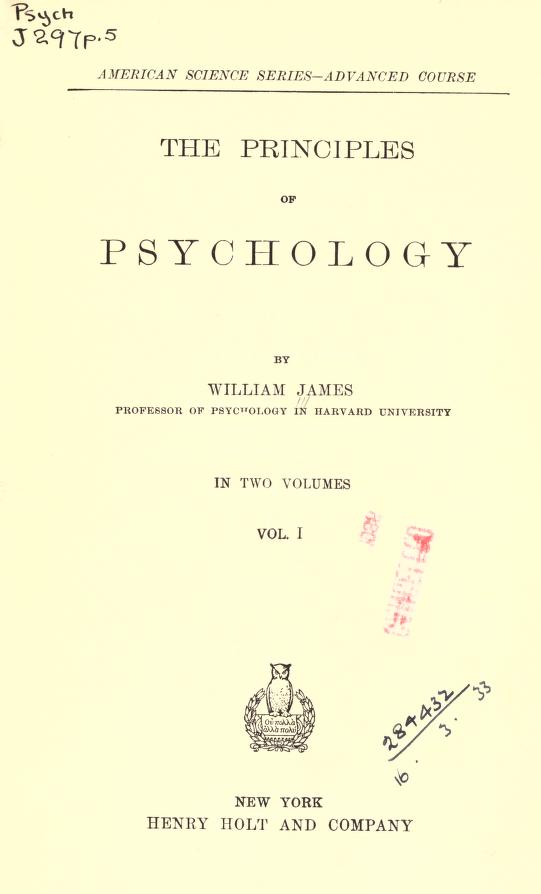
James wrote The Principles of Psychology (1890). Later authors in bioelectricity and the biology of form cite it for a definition of intelligence as reaching the same goal by different means1. Lyon also places James among thinkers who tied cognition to what an organism does to stay alive in its niche5.
- Born
- 11 January 1842
- Died
- 26 August 1910
- Country
- United States
- Field
- philosopher, psychologist, university teacher
- In the library
- 1 work, named in 12 passages elsewhere
- Facts from
- Wikidata · Wikipedia · Open Library
A definition used by Levin
Levin credits James with an early cybernetic view of intelligence, defined as a degree of the ability to reach the same goal by different means1. Levin stresses that the definition does not depend on what the agent is made of. It asks the experimenter to name a problem space and then test what competencies the system shows in it1. Morphogenesis is offered as a case. Levin says developing and regenerating tissue meets James' test of fixed ends with varying means2. Pio-Lopez and colleagues repeat the claim and call morphogenesis a basal intelligence3.
Applied to tissue
McMillen and Levin apply the same definition to the vertebrate segmentation clock. They say it stays robust under interventions and can take different paths through morphospace to cut tissue into correctly sized segments4. They add that changing the geometry of the tissue tests this intelligence by forcing it across a different landscape4. In these papers James supplies the test. Lyon lists James with Jennings, von Uexküll, Lorenz, Gibson and Maturana as authors concerned with the biological side of cognition5.
The Principles itself
The held text of the Principles shows James defining conception as the function by which a state of mind means to think the same thing it thought on a former occasion6. Its contents list for memory includes the claims that native retentiveness is unchangeable and that all improvement of memory consists in better thinking7. In the preface James names Mill, Lotze, Renouvier, Hodgson and Wundt as sources of inspiration8. The held passages do not show the line about means and ends in James's own words.
William James anticipated a cybernetic approach to this problem by defining intelligence as a degree of
Levin M, 2023 · Bioelectric networks: the cognitive glue enabling evolutionary scaling from… · open at passage 6morphogenetic systems meet James’ test for minimal mentality: “fixed ends with varying means” (James, 1890).
Levin M, 2022 · Technological Approach to Mind Everywhere: An Experimentally-Grounded Framework… · open at passage 59It has been argued (Levin, 2019, 2022b) that morphogenesis is an example of a kind of basal intelligence, meeting William James' definition of
Pio-Lopez L, Kuchling F, Tung A, Pezzulo G, Levin M, 2022 · Active inference, morphogenesis, and computational psychiatry · open at passage 2The segmentation clock exhibits functional robustness to interventions, consistent with James’ definition of intelligence
McMillen P, Levin M, 2024 · Collective intelligence: A unifying concept for integrating biology across… · open at passage 23which historically includes William James, H.S. Jennings, Jacob von Uexküll, Konrad Lorenz, James J. Gibson, and Humberto Maturana
Lyon P, 2015 · The cognitive cell: bacterial behavior reconsidered · open at passage 15We ourselves defined it as the function by which a state of mind means to think the same whereof it thought on a former occasion.
James, W., 1890 · The Principles of Psychology, Vols. 1-2 · open at passage 1100Native retentiveness is unchangeable, 663. All im provement of memory consists in better thinking, 667.
James, W., 1890 · The Principles of Psychology, Vols. 1-2 · open at passage 12I cannot resist the temptation at the end of my first literary venture to record my gratitude for the inspiration I have got from the writ ings of J. S. Mill, Lotze, Benouvier, Hodgson, and Wundt
James, W., 1890 · The Principles of Psychology, Vols. 1-2 · open at passage 4
.jpg)